
Smart Protection
Gutter Guards Victoria
Guards reduce how often you need to clean, but they don't eliminate it. Find out which type suits your roof's debris and budget.
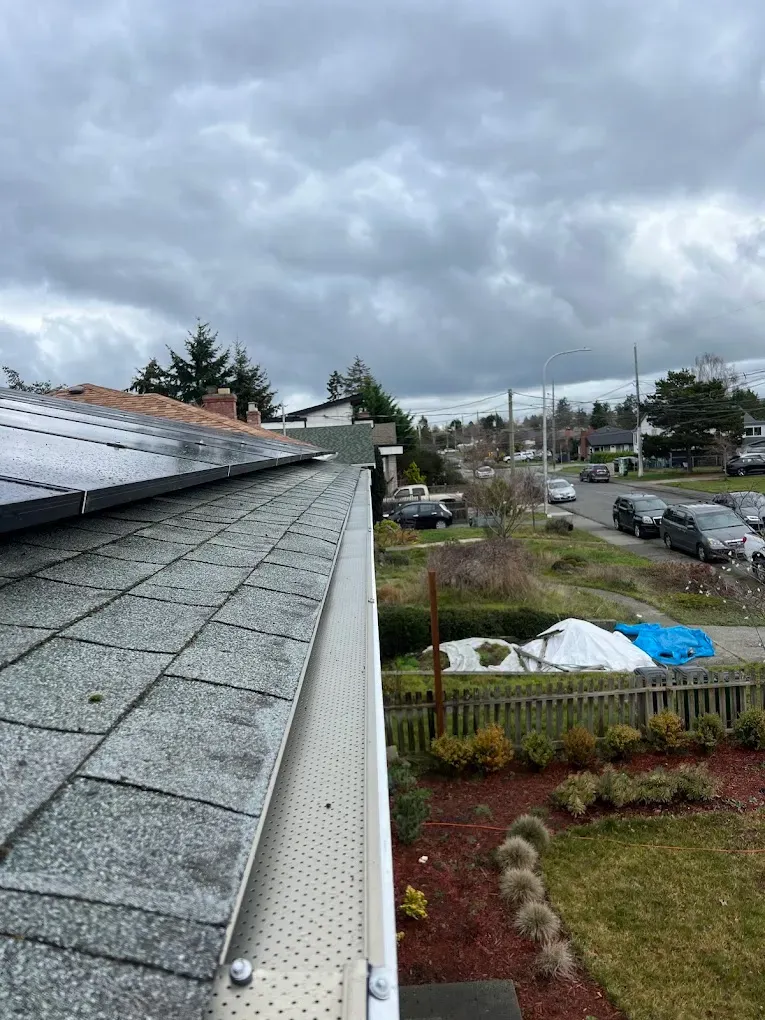
Gutter guards sound like the answer to the ladder problem. A guard promises less climbing, fewer worries, and water flowing freely without you. The reality is gentler than the promise, but still worth understanding.
A guard’s job is to let water in and keep most solid debris out. It does that. What it doesn’t do is stop the physics of your specific roof. Douglas fir needles mat together whether a guard is there or not. Garry oak acorns are shaped to jam downspout elbows. Moss grows on shade and moisture, not on soil—and a guard on a north-facing slope actually holds moisture, making moss faster, not slower. An honest guard reduces how often you climb a ladder. It doesn’t end the climbing.
Victoria’s wet season runs October through March, and summer is dry. Your gutters fill during the rain months, not summer. That’s when debris matters. A guard won’t change how many trees drop what onto your roof—it changes whether that debris stays on your gutter or falls into your garden. That matters.
Fine Mesh Guards: The Catch-All Promise
Fine mesh looks like the best option: it stops everything. It stops leaves, needles, seeds, shingle grit, everything. That’s also its problem. In Victoria’s needle-heavy areas—and there are many—fine mesh clogs within weeks in autumn. The mesh surface becomes a landing pad where needles stick and mat together, holding water on top where it can’t drain through. You end up clearing the mesh, not the gutter below. It’s faster than cleaning a gutter, but it’s not “never clean again.”
Moss takes hold on a fine mesh surface readily because the mesh holds moisture and shade. On a north-facing roof slope, you’re trading gutter moss for guard moss. Bigleaf maple seed keys from late spring into early summer clog mesh within days of a heavy drop.
Fine mesh works longest in clean areas: homes set back from large trees, open south-facing roofs, areas where debris is light and intermittent. If your lot is small and your canopy is distant, fine mesh can space out your cleaning from twice yearly to once yearly or beyond.
Coarse Screens: The Practical Compromise
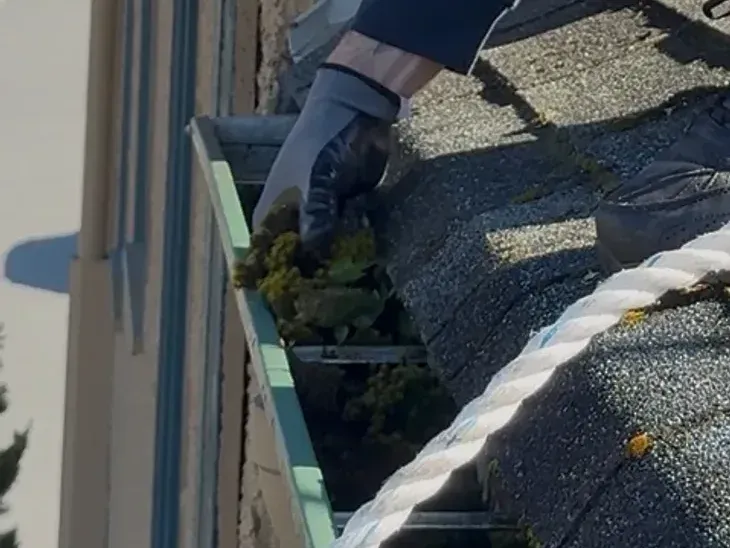
A coarser screen (roughly ⅛-inch) lets smaller stuff through but stops leaves and larger debris. In a Victoria home under Douglas fir and bigleaf maple, that means you still fish needles and maple keys out of the gutter below. The screen itself stays clearer longer because it’s not a mat—water flows through more freely. Moss grows more slowly on a coarse screen because water runs off faster.
The tradeoff is obvious: you keep the screen clear (yearly), but the gutter below still needs attention. That’s honest work, and for many homes, it’s the right balance. You’re not climbing into the gutter itself, just clearing the screen and occasionally flushing.
Foam Inserts: Dense and Low-Friction
Foam blocks sit inside the gutter, blocking debris from falling in. They’re soft, so leaves compress against them; water still flows around the edges. Foam handles occasional debris well but compresses over time, especially under freeze-thaw cycles. Victoria’s wet winters are hard on foam—water saturates it, it stays damp, and moss grows inside. Foam inserts typically need replacing every 5–7 years.
Needle mats clog foam quickly. They compress the foam surface into a waterproof barrier, and then water sits on top.
Reverse-Curve Systems: The Long-Interval Leader
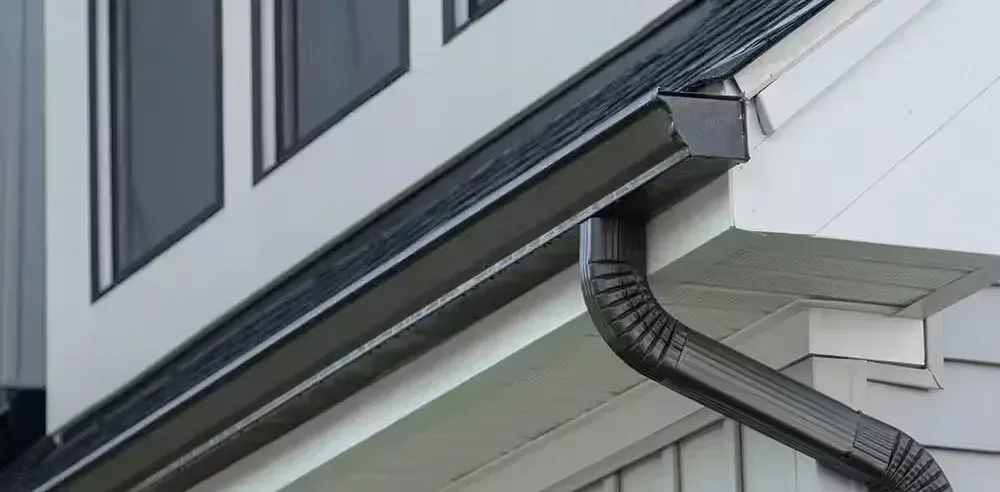
A reverse-curve guard curves back over the gutter, forcing water sharply downward while redirecting heavier debris to fall past the gutter edge. It’s the most expensive guard but the longest-lasting between cleanings. On a moderate debris roof, reverse-curve systems can stretch to 18–24 months without cleaning.
Needles still accumulate, but they pile on top of the curve rather than clogging a mesh. Water flows fast, so moss grows slowly. Downspout clogs are less common because most debris overshoots.
Reverse-curve systems work best when the downspout elbow is clear. If you have Garry oak acorns or heavy oak leaf buildup below the guard, you still need to address the downspout. The guard protects the gutter, not the pipe below it.
Making Your Choice
Here in Greater Victoria, no single guard works perfectly for all roofs. A cottage under second-growth Douglas fir needs something different from a Rockland estate with bigleaf maple, which needs something different from a Fairfield bungalow with postwar copper gutters and no overhead trees.
What works is matching the guard to your roof’s actual debris load, your tolerance for ladder work, and your budget. A guard that cuts your cleaning from twice yearly to once yearly is a win. A guard that promises never is a red flag.
We’ll assess your roof, your trees, and your gutters—including whether the gutters themselves are sound—and help you pick the guard that makes sense for your property and your expectations. A guard installed on a failing gutter is money wasted. A guard on a solid gutter with heavy debris overhead might save you a dozen ladder climbs over its life.
How it works
What Happens When You Book Us
Four steps and no surprises. You tell us about the house, we price the real roofline, and the ladder work is ours.
Send us the details
Your address, how many storeys, and anything we should know before we turn up.
The awkward parts are the useful ones — an oak hanging over the back run, a side gate too narrow for a ladder, a neighbour's drive we'd need to cross.
We price your actual house
Every quote is built from your roofline, not from an average.
Run length, height, pitch, how much has packed in and how we'll reach it all move the number. You'll have it in hand before anything is booked.
We do the climbing
Gutters cleared, downspouts flushed, water followed to where it lets out.
Whatever comes out of the run leaves with us. Nothing gets tipped into a garden bed or left bagged by the gate.
You hear what we saw
From the roof edge we see things that are invisible from the lawn.
A hanger starting to pull, a seam beginning to weep, water standing in a section that should drain. You'll hear about it either way, with nothing attached.
Four steps. That's the whole thing.
- You send us the address.
- We send you the price.
- We clear the gutters.
- You stop thinking about them.
Ready when you are — send the form or give us a call for a free quote.
Customer reviews
What customers say
“Came out and quoted my gutters the same day I requested it! Came out and cleaned my gutters and did some repair while they were up there for a reasonable price! Going to use them for my windows in the spring. Great service”
“Amazing! Sent in a request form on their website in the morning, heard back that afternoon, and booked for the next day. Very fast, reliable, and efficient.”
Got questions?
Gutter Guards — questions
Do gutter guards eliminate the need to clean gutters?
No. Guards reduce how often you clean, but they don't end it. Fine mesh stops smaller debris but clogs with moss and needle mats. Screens let finer debris through. Foam inserts hold up well against leaves but clog over time. Reverse-curve systems work longest between cleanings, but they still need annual maintenance. The best guards cut your cleaning from twice yearly to once yearly, or every 18 months.
Which guard works best for Douglas fir needles?
This is the hard case. Fir needles mat together when wet, trapping water on top of the gutter where they can't flow through. Fine mesh clogs within weeks under heavy needle load. Coarse screens let needles through into the gutter below. Foam inserts compress and hold water. Reverse-curve systems work longest because the curve forces water over the edge, but needles still pile up on top. Victoria's second-growth fir is relentless—no guard eliminates needle cleaning, but reverse-curve systems space it out furthest.
Will gutter guards keep out moss?
Partially. Moss doesn't need soil—it needs water and shade. Fine mesh and foam both trap moisture where moss thrives. Coarse screens and reverse-curve systems shed water faster, so moss grows more slowly. North-facing roof slopes here grow moss readily; a guard helps but won't stop it entirely. If your north slope already has moss, a guard will make it visible earlier because the guard surface will green before the gutter below. Annual or 18-month maintenance is still necessary.
Can guards be installed on old gutters?
Yes, usually. A guard sits on top of your existing gutter. If the gutter is leaking, sagging, or the fascia is rotted, those need fixing first—a guard on a failing gutter just hides the problem. Many older Victoria homes have gutters that are sound but just dirty; those are perfect candidates for a guard. We inspect before recommending.
How often do gutter guards need maintenance?
That depends on the guard type and what's above you. Fine mesh and foam typically need cleaning or flushing yearly. Coarse screens can go 18 months in moderate debris loads. Reverse-curve systems often stretch to 18–24 months. Victoria's wet season runs October to March, so plan autumn checks. If you have a large Douglas fir overhead, expect more frequent work. Heavy maple seed keys in spring also shorten the interval.
What happens if a guard gets damaged?
It depends on the damage. A dented screen or mesh still sheds water, just less efficiently. A crack or hole in reverse-curve systems can direct water behind the fascia. Small damage can be patched; larger damage often means replacing that section. We repair or replace guards as part of regular maintenance visits.
Are gutter guards worth the investment?
Yes, if you value your time and your roof. Guards cost more upfront but extend the time between cleanings and reduce your exposure to a ladder. If you have a steep roof, tall trees, or heavy debris, guards pay for themselves in convenience over three to five years. If your gutters are already clear and your trees minimal, the return is slower. We can quote the guard cost and walk through the cleaning interval so you can decide.
Which guard handles Garry oak acorns best?
Reverse-curve systems are the best choice. Garry oak acorns are large and heavy—they jam in downspout elbows even when gutters are clean. A guard can't stop them from falling, but a reverse-curve deflects water sharply, and heavier debris tends to fall off the edge instead of clogging. Coarse screens work reasonably well, but acorns still make it through to your downspout below, requiring gutter flushing. Plan on addressing the downspout itself, not just the guard.
Can I install gutter guards myself?
Yes, if you're comfortable on a ladder. Most guards clip or nail to the existing gutter and fascia. The work is straightforward but slow and exposure-heavy. We install guards as part of our service, and we know how to handle Victoria's mix of cottage roofs, heritage gutters, and postwar bungalows—the pitch and fastening vary street to street here. A professional install also means you have recourse if the guard fails.
What guarantee do you offer on guards?
We guarantee our installation workmanship for 12 months. If a guard we installed fails due to a fastening issue or a defect in our work, we'll fix it. The guard material itself carries its own limited guarantee, typically 5–10 years depending on the type. We can review those specifics when quoting.
Gutter Guards in Victoria and the surrounding area
Tell us the address and we will get you a price.